
What a Steele County Criminal Court Record Covers
In Steele County, criminal matters are part of District Court filings. A criminal court record shows how the case entered court, what motions or hearings occurred, and what the outcome line says once disposition is entered. It is a case-level record, not only a history of law enforcement detention.
The core file is opened when charges are formally placed before the court system. Use the court record for pleas, disposition, and sentence details, then use law-enforcement channels if the question is about reports, warrants, or booking.
How to Search Steele County Criminal Court Records
Begin with MCRO Case Search and then pull related hearing entries and judgment data to build a full view of the criminal timeline.
- Open MCRO Case Search and use Case Number or Name search.
- For name searches, be aware of limits on pending cases and use exact or narrow filters.
- Set case filters to Criminal and limit to Steele County.
- Open the case result and move to the Register of Actions.
- Use Hearing Search for hearing sessions and judge assignment details.
- Use Judgment Search for money judgment details where available.
- Use Court Administration for certified copies and restricted files.
Steele County Criminal Case Flow
Most criminal cases follow a predictable progression in court records, but each case can pause or branch based on status, motions, or plea changes.
Standard sequence: Charges Filed -> Arraignment -> Pretrial -> Plea or Trial -> Disposition -> Sentencing.
| Stage | What It Shows in a Court Record |
|---|---|
| Charge filing | Complaint or charging document opens the criminal file and defines the asserted offense. |
| Arraignment | Initial appearance, rights advisement, and response stage. |
| Pretrial / Motions | Bond updates, discovery disputes, continuances, and motions in limine. |
| Plea or Trial | Case outcome path through plea, trial, or other adjudication route. |
| Disposition | Guilty, not guilty, dismissed, or reduced charge outcomes are reflected in outcome fields. |
| Sentencing | Imposition of penalties, conditions, probation, fines, or judgment entry. |
What a Steele County Criminal Court Record Shows
The criminal record structure is consistent across case types and includes the event history needed to understand progress and outcomes.
| Field | What It Shows |
|---|---|
| Case Number | Case identifier using Steele County format with Criminal category prefixes. |
| Defendant | Name shown in the filing and hearing rows where public. |
| Charges | Charged offenses, statute references, and count-level details. |
| Plea | Case status entries for plea type and related action entries. |
| Disposition | Outcome entry including conviction, dismissal, or case termination events. |
| Sentence | Court-imposed term type, fines, probation terms, restitution, and related conditions. |
| Hearing details | Courtroom, date, hearing type, and judicial officer information. |
| Financial items | Fine and fee data where present in filing and judgment-related entries. |
MCRO Case Search and Hearing Search are the first-line tools for criminal record extraction.
Charges vs. Convictions
Charged conduct is not the same as a final criminal outcome. A filing can begin with a charge and later move to dismissal, amendment, plea, or conviction. Dispositions can also include non-trial outcomes for diversion or negotiated resolution.
| Charge | Conviction | |
|---|---|---|
| Stage | Allegation and filing event. | After the court accepts a finding or plea result. |
| Standard | May be dismissed, amended, reduced, or withdrawn. | Requires legal disposition in the criminal file. |
| Disclosure note | Visible early and often in pending matters. | Appears in the outcome and judgment sequence. |
When you need charge-level history before disposition, use the case timeline. For conviction history used as a background resource, use BCA tools with their narrower criteria.
State-Level Criminal History Versus Court File
Criminal court records and BCA criminal history data are different sources. A court record is case filing and progression data, while BCA focuses on conviction history and public criminal-history output rules.
Minnesota Bureau of Criminal Apprehension search is one source for criminal-conviction style data, not a substitute for full court case records.
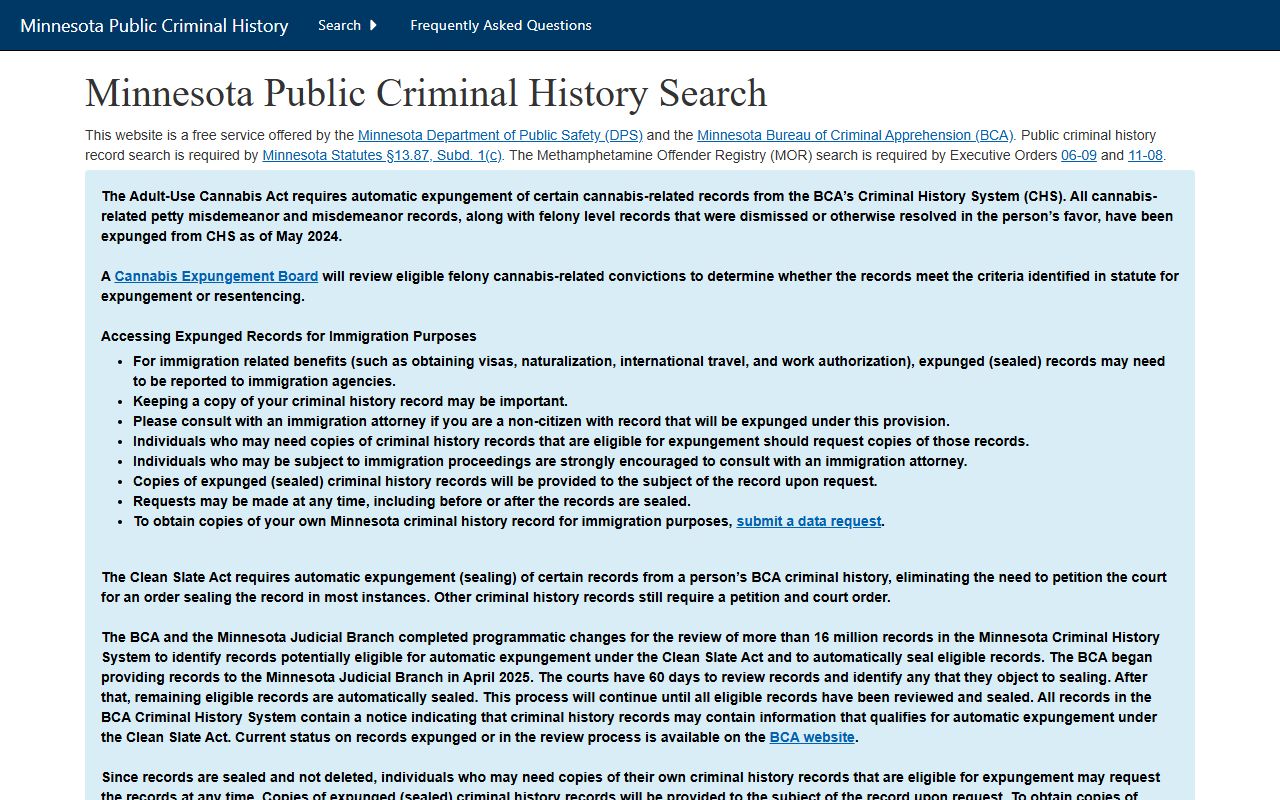
Use BCA for what it exposes; use court records for filings, court appearance events, and formal sentencing entries.
BCA public criminal history search is the companion channel for conviction-only lookup by name and date rules.
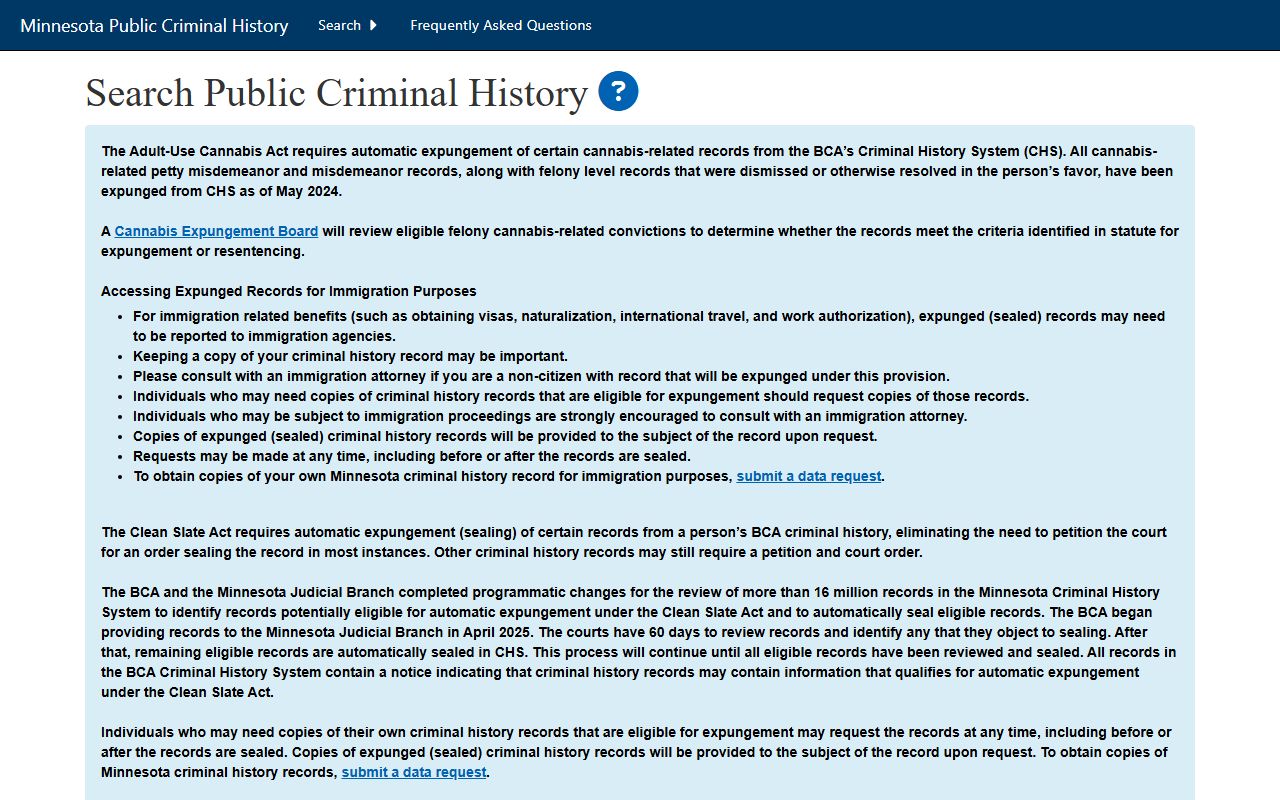
This tool requires required search fields and returns public conviction data only.
The Minnesota DOC public locator is the custody-side search for state inmates and offenders.
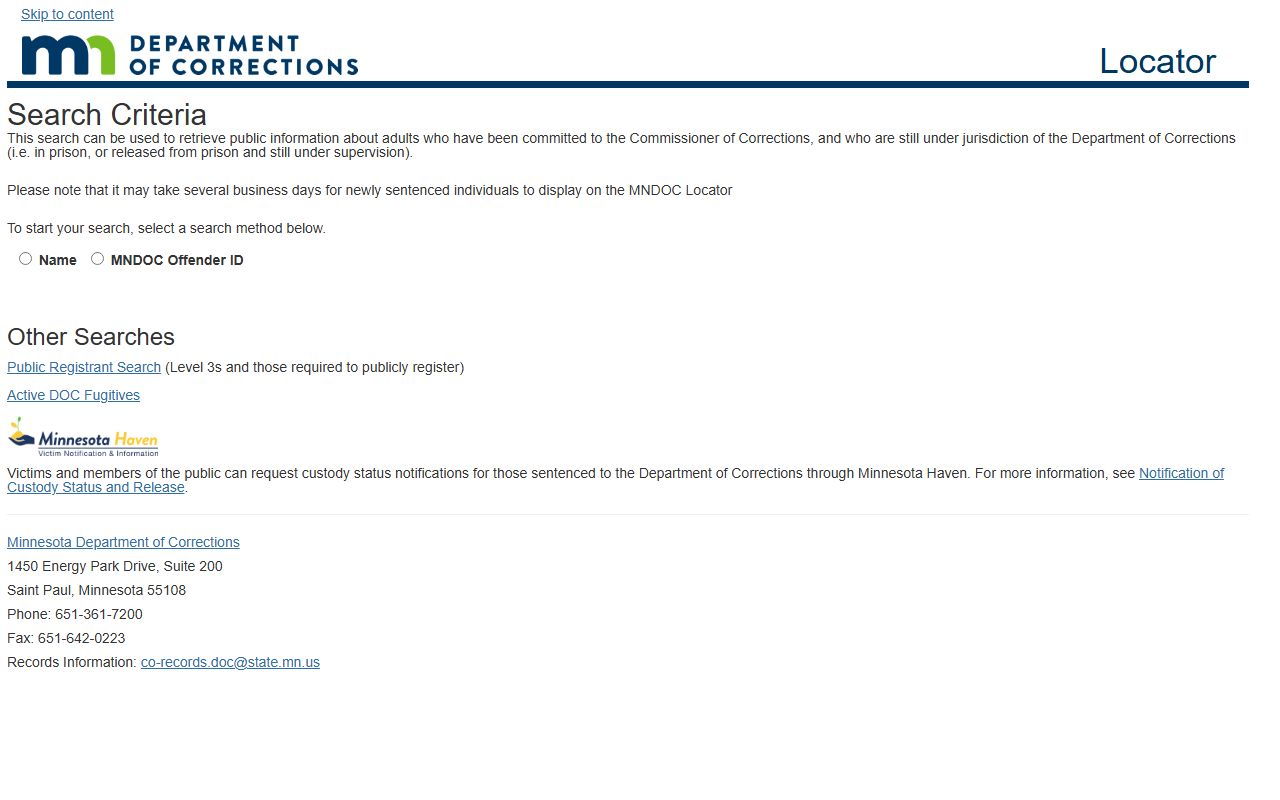
Use this channel only to confirm custody context, not to replace Steele County case filings.
Minnesota Family and Visitor program locator focuses on search support for family visits and fugitives.
DOC tools can confirm custody context but do not replace Steele County docket and case records.
Minn. Stat. 13.87 defines public criminal-history data categories for conviction access.
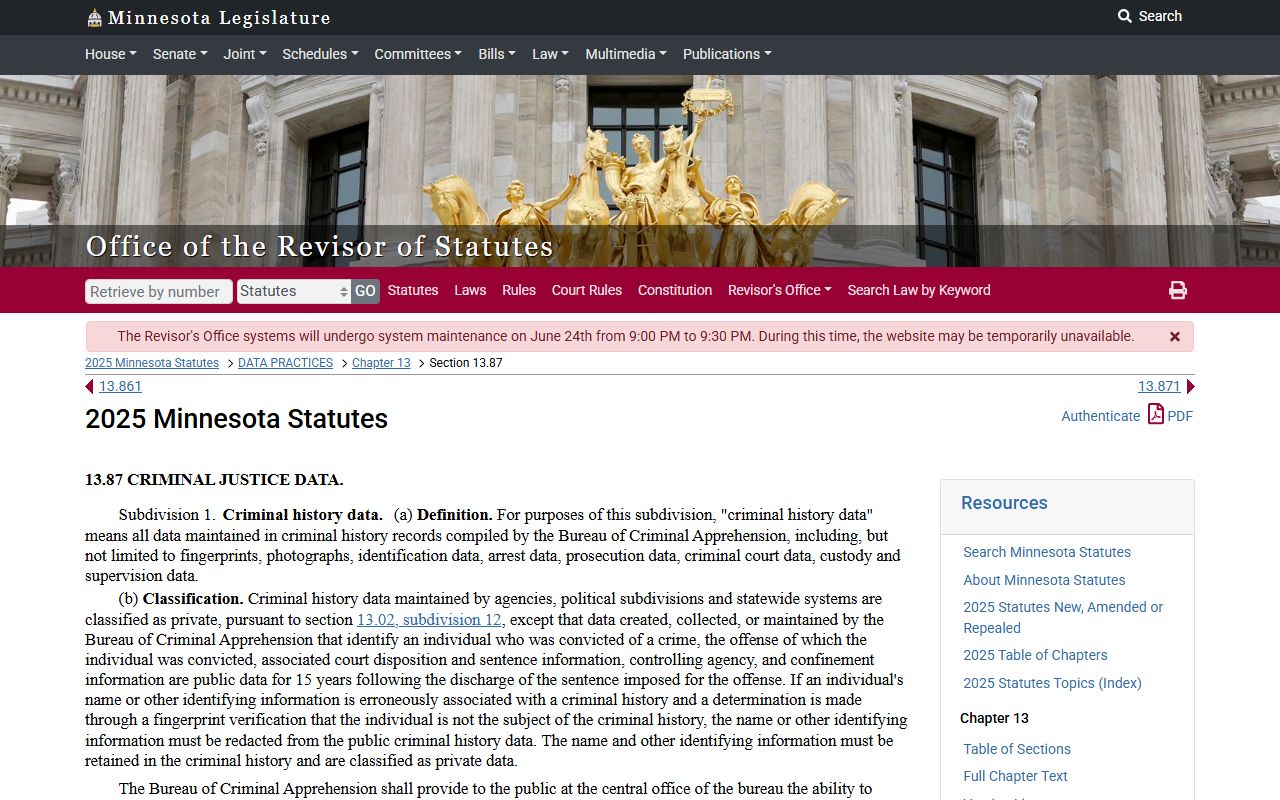
Use this statute with BCA guidance when interpreting why a data point is absent from online conviction search.
Warrants, Probation Holds, and Related Events
Criminal records often include warrants, probation terms, and violation events. A pending warrant can appear as an action entry before any full judgment. For confirmation, use court records and local confirmation channels together.
- Bench warrant entries often follow missed court attendance.
- Probation violation references can appear in action history and disposition fields.
- Warrant arrest data may also appear in sheriff publications when custody status changes.
If a warrant is tied to a criminal file, verify in Steele County through the same case number rather than relying on partial roster snippets.
Sealed vs. Expunged Criminal Records
Minnesota seals and expungement provisions affect public visibility, and a sealed record is generally hidden from public access while not fully erased. Expunged treatment can differ by statute and petition pathway.
| Sealed | Expunged | |
|---|---|---|
| Public visibility | Usually restricted from public view. | Records may be treated as unavailable in public channels. |
| Court treatment | Case remains for legal handling. | Legal handling remains while status is adjusted by statute. |
| Statutory path | Frequently petition-based process. | May include statutory automatic provisions. |
Specialty Criminal Court Paths in Steele County
Steele County criminal justice workflow can include diversion pathways through court-supported programs. The available public references include Steele/Waseca Drug Court and Veterans Treatment Court in the Third Judicial District context. These entries do not replace standard docket and case records, but they can define post-charge case directions.
- Drug Court participation is tied to eligibility and treatment compliance, and completion can alter sentencing trajectory.
- Veterans Treatment Court supports returning participants with structured supervision and mental health-related supports.
- Contact the court or assigned prosecutor intake channels for current eligibility details.
Accessing and Copying Criminal Records
Use Court Administration channels for certified copies and formal requests. Court records can be accessed directly online for discovery and status, while copies require fee confirmation and administrative handling.
| Request type | Fee | Notes |
|---|---|---|
| Certified criminal record copy | $14 | General court record copy fee. |
| Certified screen print | $14 | System record or document copy request. |
| Exemplified and certified copy | $28 | Requires formal authentication. |
| Uncertified copy or scan | $0 | Where offered, no fee for informal output. |
| Expungement-related filing requests | $310 | Refer to current court filing guidance for petitions. |
Related Record Routes
If the goal is full criminal-file context, include charge progression and docket tracking from sister pages such as court charges after arrest and Steele County court dockets.
Use inmate records only for custody roster details, not for court outcome confirmation.