
Active Warrants in Steele County
Steele County publishes an active warrant page through the Sheriff's Office and Detention Center section. The county warns that the web list is not enough for enforcement or surrender decisions by itself. Warrants must be confirmed by the issuing agency because there can be delays between a court action, a Sheriff's Office system update, and a public website update.
The official Steele County warrant database is updated Monday through Friday at 9:00 a.m. Questions about a Steele County warrant should go to the Detention Center at 507-446-7000, the Sheriff's Office at 507-444-3800, or Steele County District Court at 507-686-7012 when the warrant is tied to a court case. A warrant may also be reflected in the jail roster as a warrant arrest, probation or parole violation, or hold for another agency.
The Steele County active warrant page is the county source assigned for this warrant search page.
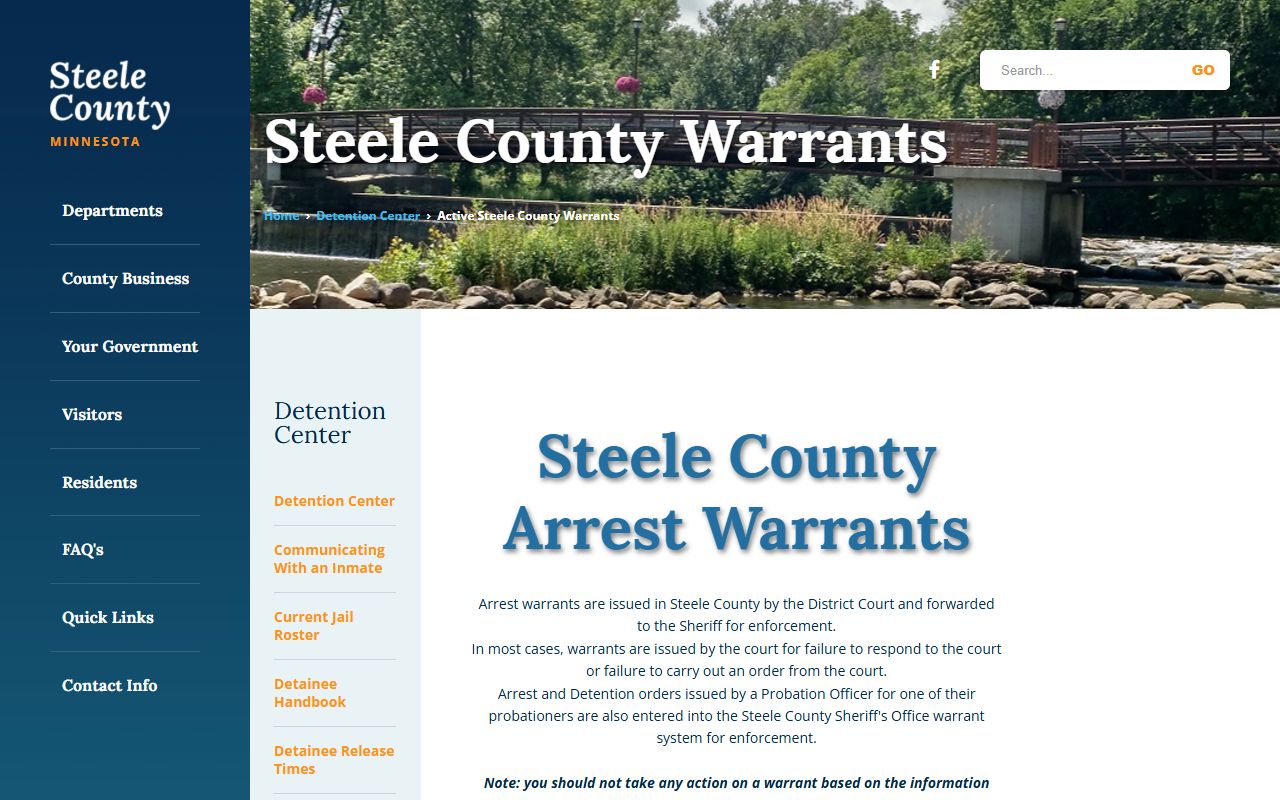
That county page is the starting point, but the county's own warning makes confirmation with detention, court, or the issuing agency essential.
Types of Warrants in Steele County
Steele County warrant records may involve several warrant types. A public list may not explain the full legal reason, so the related court case, roster entry, or issuing agency matters.
- Arrest warrant - a court order authorizing arrest after a complaint, probable-cause finding, indictment, or charging process.
- Bench warrant - a judge-issued warrant often tied to missed court, noncompliance, contempt, or probation violation.
- Search warrant - a court order authorizing a search, often sealed or not public until execution and later filing.
- Probation violation warrant - a warrant linked to an alleged violation after sentencing or supervised release.
- DOC fugitive warrant - a state corrections matter listed separately from county bench or arrest warrants.
How to Search Steele County Warrants
The Steele County warrant page is a list-style public resource rather than a fielded search form. Use browser search within the page or linked warrant list, then confirm any possible match with official staff before making decisions. If a case number appears, use MCRO by case number because pending criminal cases may not appear by defendant-name search.
- Open the Steele County active warrant page and review the county warning about confirmation.
- Search the list for the person's full name, then compare any case number, charge, or issuing-agency detail shown.
- Call the Detention Center, Sheriff's Office, District Court, or issuing agency to confirm the warrant before acting.
- If a Steele County case number is listed, search that number in MCRO Case Search.
- Check the current jail roster if the person may already be in custody on a warrant arrest or agency hold.
Steele County Warrant Search Fields
The official research did not find a fielded Steele County warrant search form. The practical search fields come from the public warrant list, jail roster snippets, and related court records.
| Field Label | Type | Required | Notes |
|---|---|---|---|
| Name | List text | Yes | Compare full name carefully before calling to confirm. |
| Case number | Court identifier | No | Use in MCRO when shown, such as a Steele County 74-CR case reference. |
| Warrant reason | List text | No | May show warrant arrest, probation/parole violation, or related hold reason. |
| Issuing agency | Agency text | No | Must confirm with the issuing agency before action. |
| Update time | Page notice | No | County says the public database updates Monday-Friday at 9:00 a.m. |
What a Steele County Warrant Record Shows
Steele County warrant record details are limited in the public research capture. The reliable fields come from official warrant and inmate snippets and should be read as leads for confirmation, not final proof of status.
| Field | What It Shows |
|---|---|
| Name | Person identified in the warrant or custody-related listing. |
| Warrant type or reason | Possible warrant arrest, bench warrant, probation/parole violation, or agency hold. |
| Case number | Related court number when available, such as a Steele County criminal case reference. |
| Issuing agency or court | Agency that must confirm the warrant before enforcement. |
| Charges or statutes | Offense description or statutory reference tied to the warrant or hold. |
| Bond | Not captured in the public warrant-page text; ask detention or court staff. |
| Status | Needs direct confirmation because online status can lag the live system. |
What to Do If You Have an Outstanding Warrant
Anyone who may have an outstanding Steele County warrant should confirm it with the Detention Center, District Court, or issuing agency before appearing at a jail, courthouse, or law-enforcement office. Ask whether the warrant is a bench warrant, arrest warrant, probation violation warrant, or out-of-county hold. Also ask whether bond is set, what payment methods are accepted, and whether counsel should be contacted before surrender.
Important: Confirm a Steele County warrant with the issuing agency before relying on the public list.
Crime Stoppers and Anonymous Tips
The Steele County Sheriff's Office lists a law-enforcement tip line for all Steele County law-enforcement agencies at 1-866-878-7964. Non-emergency requests for a licensed deputy go through Dispatch at 507-451-8232. For DOC fugitives, the Minnesota Department of Corrections has a separate active-fugitive process and DOC tip line at 651-603-0026.
Restricted Steele County Warrant Records
Some Steele County warrant records are not public. Search warrants may be sealed during an investigation or until execution and filing. Juvenile matters, domestic violence-related restrictions, sealed court records, and expunged records can limit public access. Federal warrants are not county warrants and may be sealed in federal systems. State DOC fugitive records are separate from county bench or arrest warrants.
Minnesota's automatic-expungement framework can affect public criminal-record visibility after relief is granted.
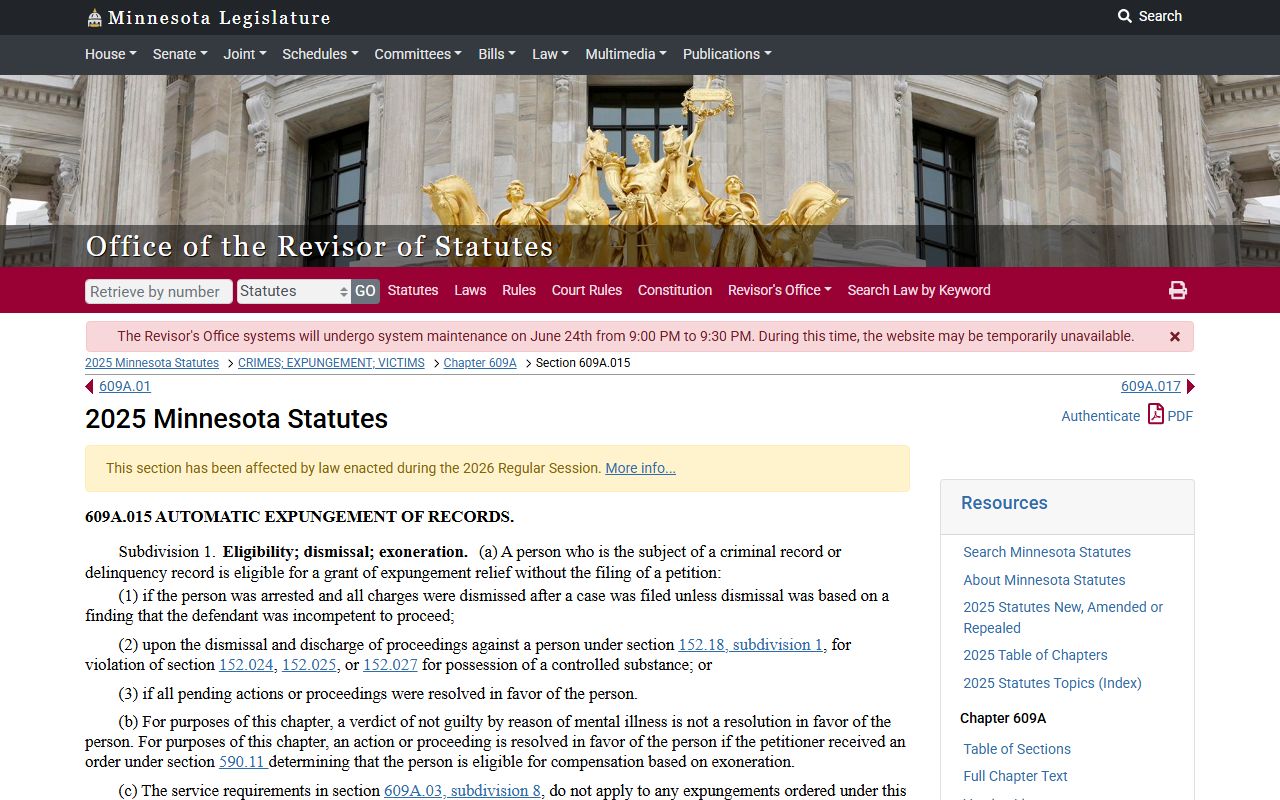
Expungement does not prove a warrant was cleared, but it helps explain why older criminal history may no longer appear in public systems.